The gingerbread home, the evil witch, and the thrilling conclusion are typically what come to mind when people think of Hansel and Gretel. But this fairy tale is much more than just its magical surroundings. Hansel and Gretel teaches youngsters valuable lessons about family, survival, and growing up, just like many other classic fairy tales. Gender-related ideas are also presented. As Hansel takes the lead and defends his little sister, the plot initially appears to fit conventional expectations. But as the narrative progresses, Gretel emerges as the real hero thanks to her bravery, intelligence, and independence. Because of this, Hansel and Gretel is a fascinating illustration of how children’s literature can both support and contradict conventional gender norms.
Hansel is shown as the more self-assured and resourceful child at the start of the narrative. He instantly comes up with a scheme to mark the way home with white pebbles after hearing of his parents’ intention to leave the kids in the wilderness. Gretel follows her brother’s example and has faith in his ability to resolve the issue. This reflects a conventional notion that ladies should rely on others for guidance, whereas guys should be courageous, protective, and responsible. As a result, young readers can perceive Hansel as the pair’s obvious leader in the opening section of the narrative.
When the kids are abandoned a second time, Hansel tries to keep Gretel and himself safe by scattering breadcrumbs along the way. Even when the birds consume the crumbs, Hansel is still in charge of figuring out how to get home. His tenacity demonstrates traits like bravery, leadership, and problem-solving that are frequently linked to traditional masculinity. Gretel, on the other hand, continues to be quieter and less self-assured, reinforcing the notion that girls should follow rather than take the lead.
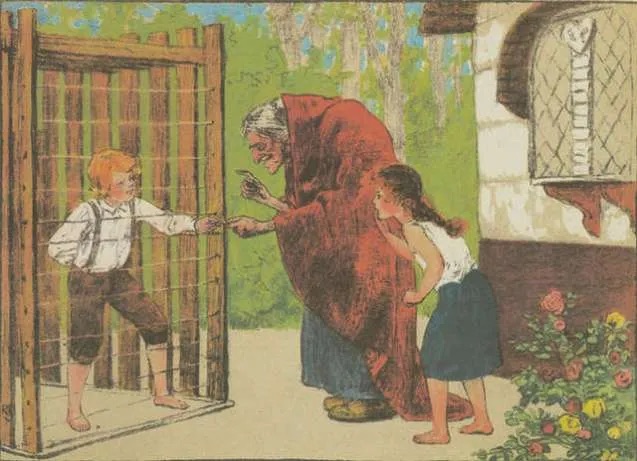
But when the kids encounter the witch, the narrative takes a significant turn. Gretel is made to labour inside the witch’s home, while Hansel is imprisoned in a cage and rendered helpless. The conventional gender roles start to shift at this point. Gretel recognises she needs to take action rather than waiting for someone else to save them. Gretel deftly acts as though she doesn’t comprehend the witch’s instructions to check if the oven is hot enough. Gretel saves herself and her brother when she shoves the witch into the oven and shuts the door.
The reader’s view of Gretel’s character is significantly changed at this point. She is no longer just Hansel’s younger sister. Rather, she ends up being the one who vanquishes the primary antagonist of the story. Her bravery, knowledge, and quick thinking demonstrate that gender is not an obstacle to strength. Despite starting the story as the guardian, Hansel needs Gretel’s assistance to get away. He is set free, the witch’s treasure is found, and Gretel assists the kids in making a safe return home. This dispels the myth that girls are helpless or constantly in need of saving.
According to Jack Zipes, fairy tales frequently mirror the ideals and beliefs of the civilisations in which they originated. Fairy tales are more than just bedtime stories; they teach readers about morals, behaviour, and social expectations. In its early chapters, Hansel and Gretel reflects certain conventional notions about boys and girls, but it also challenges these notions by letting Gretel emerge as the protagonist. The narrative implies that bravery and intelligence can belong to anyone, regardless of gender, rather than portraying courage as a masculine trait.
Jacqueline Rose also contends that adult conceptions of childhood influence children’s literature. Children are frequently taught how to behave by adults through stories. Children learn about family ties, obedience, and resiliency from Hansel and Gretel, but they also discover that appearances may be deceiving. Gretel’s transformation from a reserved younger sister to the one who rescues both kids shows that girls can make tough choices and assume accountability in perilous circumstances. Compared to many other conventional fairy tale heroines, this makes her a strong female figure.
Despite being told hundreds of years ago, Hansel and Gretel’s themes are still relevant today. Readers today are still debating gender equality and dispelling myths about what boys and girls are capable of. While Hansel’s vulnerable moments teach readers that boys do not necessarily need to be strong or in charge, Gretel’s actions demonstrate that girls may be brave leaders. These concepts teach kids that bravery and brilliance are not gender-specific traits but rather attributes that anybody can have.
In general, compared to many classic fairy tales, Hansel and Gretel offers a more balanced perspective on gender. In the end, Gretel plays the most significant role in the story, despite the fact that it starts out with the conventional notions of boys as leaders and girls as followers. Both children are saved by her bravery, tenacity, and intelligence, and they are able to safely return home. This dispels gender preconceptions and helps young readers understand that being a male or a girl does not define heroism. Beyond the gingerbread house and the evil witch, children can learn important lessons about equality, resiliency, and the value of self-belief.
If you’d like to learn more about the history of fairy tales and their many versions, explore the British Library’s fairy tale collection.
 billiereads